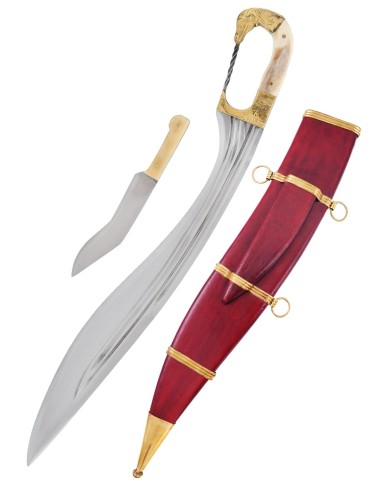
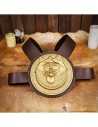
Falcata (Kopis) with horse head handle, 4th - 3rd century BC

Falcata (Kopis) with horse head handle, 4th - 3rd century BC

The falcata is the typical sword of the Celt-Iberians who were a Celtic people living in the Iberian Peninsula, chiefly in what is now north central Spain, before and during the Roman Empire. The sword is similar to the greek kopis and nepalese khukri.

The Celtiberians were the most influential ethnic group in pre-Roman Iberia, but they had their largest impact on history during the Second Punic War, during which they became the (perhaps unwilling) allies of Carthage in its conflict with Rome, and crossed the Alps in the mixed forces under Hannibal's command. As a result of the defeat of Carthage, the Celtiberians first submitted to Rome in 195 BCE.

help_outlineAsk about product
Falcata (Kopis) with horse head handle, 4th - 3rd century BC

Falcata (Kopis) with horse head handle, 4th - 3rd century BC


The falcata is the typical sword of the Celt-Iberians who were a Celtic people living in the Iberian Peninsula, chiefly in what is now north central Spain, before and during the Roman Empire. The sword is similar to the greek kopis and nepalese khukri.

The Celtiberians were the most influential ethnic group in pre-Roman Iberia, but they had their largest impact on history during the Second Punic War, during which they became the (perhaps unwilling) allies of Carthage in its conflict with Rome, and crossed the Alps in the mixed forces under Hannibal's command. As a result of the defeat of Carthage, the Celtiberians first submitted to Rome in 195 BCE.

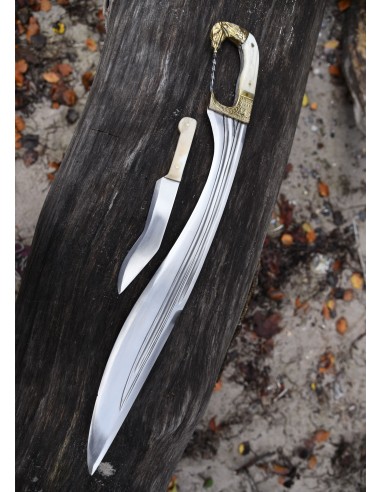
This falcata is a replica of a sword from the 4th - 3rd century BC. It has a brass hilt ornamented with a horse's head. The sides of the handle are made of bone and riveted with brass rivets. The carbon steel blade has interesting "blood grooves."
 

F27020900001
No reviews

You might also like

Comments (0)
No customer reviews for the moment.
Product added to wishlist
Product added to compare.